

Red Hill Community Representation Initiative meeting at the Office of Hawaiian Affairs. Photo credit: Wayne Tanaka.
This week Thursday, October 22, there will be two meetings regarding the latest developments in the ongoing Red Hill water crisis.
First, from 1-5pm, the Fuel Tank Advisory Committee (FTAC) will hold its last twice-a-year meeting for 2026, with presentations from the Navy, EPA, the Hawaiʻi Department of Health (DOH), the Red Hill Registry, and the University of Hawaiʻi on various matters ranging from tank cleaning and pipeline removal, to groundwater monitoring and environmental remediation efforts, to human health impacts. The meeting will take place in-person at the Uluakupu Building Red Conference Room, 2385 Waimano Home Road, Pearl City, HI 96782, and virtually via Microsoft Teams at this link here.
Written testimony can be submitted to Katherine Tran at katherine.tran@doh.hawaii.gov; you can also sign up to provide remote verbal testimony ahead of time by e-mailing Katherine, although this is not required to testify.
More information can be found on the Fuel Tank Advisory Committee website here.
Please consider submitting testimony to the FTAC, including your questions and concerns about the safety and future of our most precious resource. Sample testimony and questions are provided below.
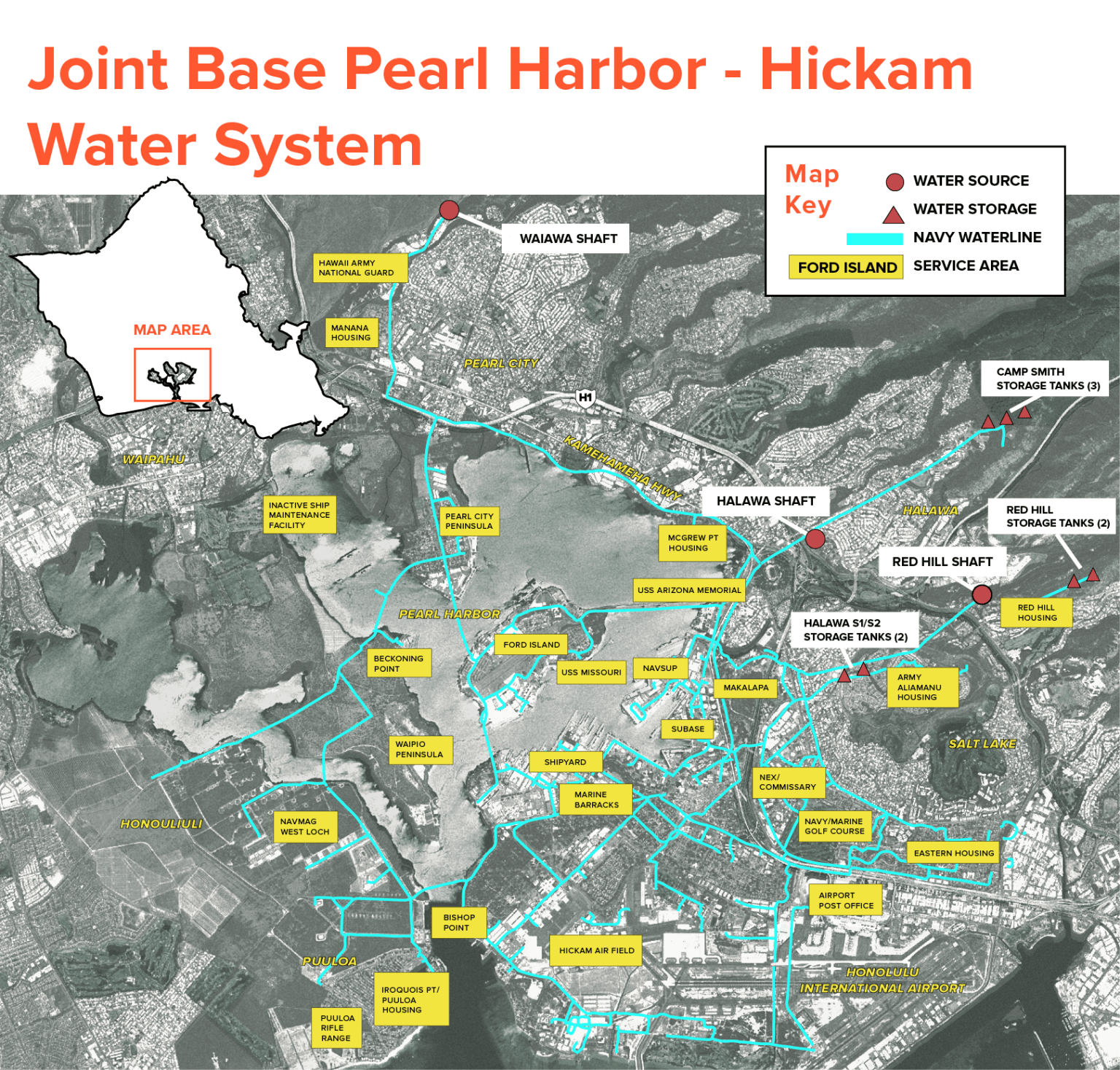
Second, from 5-8pm, the Red Hill Community Representation Initiative (CRI) will host an online meeting, focused on the pending reactivation of the Navy’s long-shuttered ʻAiea Hālawa shaft.
Tune in to hear community and expert questions and concerns from CRI Chair Chris Anton, retired EPA hydrologist Dr. Eva Davis, Sierra Club of Hawaiʻi Director Wayne Tanaka, and Board of Water Supply Chief Engineer Ernie Lau. Please encourage anyone you know who may be on the Navy’s water lines to attend.
Register to attend the CRI meeting at http://bit.ly/CRIzoom.
Unfortunately, the Red Hill water crisis is #NotPauYet, and likely won’t be for years to come. This week's meetings will provide critical opportunities to understand what is and is not being done in response to the ongoing crisis, and to ensure that the resulting harms and threats to our water, our health, and our future are not swept under the rug by those who created this mess.
Sample FTAC Testimony (submit any/all questions you would like answered):
To: katherine.tran@doh.hawaii.gov
Subject: Testimony to Fuel Tank Advisory Committee
Dear Fuel Tank Advisory Committee Members,
Please address the following questions and concerns as they arise under the relevant agenda items.
If the answers cannot be provided at the meeting due to time constraints, I respectfully request that responses are sent to me by the relevant agencies within one month of this week’s meeting.
Thank you,
[your name]
Item II. Red Hill Bulk Fuel Storage Facility Closure
How many miles of pipeline will remain in the Red Hill Facility after closure, and are there any updates on the potentially toxic fuel-absorbing foam and epoxy that has been proposed to be used in these pipes and on the interior of the Red Hill fuel tanks?
The Honolulu Board of Water Supply, the entire Honolulu City Council, Hawaiʻi legislators including Senator Brandon Elefante and Representative Linda Ichiyama, and dozens of testifiers have all urged you to increase the frequency and scope of the Navy's groundwater testing. You must heed this call, especially with evidence showing that TPH and PFAS from under the Red Hill Facility may be migrating to the west and northwest, threatening our island's municipal drinking water sources.
Beyond this, please describe whether and how you will be expanding your groundwater monitoring well network beyond just the federal lands near Red Hill, and how you will determine the appropriate locations for any new wells.Why do the PowerBI settings in the Safe Waters website restrict access to and extraction of water testing data for independent analyses? Can this be changed and if not, why not?
Why have low-flow sampling been largely used rather than bailer sampling for groundwater monitoring, when bailer samples consistently showed higher TPH levels?
Why is data no longer being reported regarding EPA-banned pesticides that were detected and confirmed in the groundwater under Kapūkakī in June of 2021?
Navy Closure Task Force representatives have repeatedly claimed that there is “no evidence” that contamination is migrating from the Red Hill Facility. However, in addition to the BWS PFAS detections mentioned above, your own data show TPH detections, including exceedances as well as fluctuating detections, at monitoring wells RHP04B, RHMW08, RHMW12, NMW24, and RHMW16, some of which are far to the west and north of the facility. Why is this not considered “evidence” of contaminant migration?
What is the specific evidence of “natural attenuation” that Navy Closure Task Force representatives alluded to, how can you tell if this evidence is from the 2021 spill or one of the many older fuel releases from the Red Hill Facility, and have you looked at the toxicity of any degraded fuel components?
What has been the rate of remediation from the current soil vapor extraction effort, or how much contamination has been recovered from these efforts so far? As a follow up, how long would it take to remediate the environment at this rate?
Does soil vapor extraction remove jet fuel from the groundwater?
How effective is soil vapor extraction for semi-volatile contaminants like jet fuel? What happens to the less volatile compounds that don’t vaporize quickly or at all?
Has thermal remediation been considered by the Navy, and why wouldn't it be better or faster to remediate both groundwater and soil using thermal methods combined with soil vapor extraction? Is cost the primary consideration, and if so, how does that compare to the cost of using much slower methods like soil vapor extraction alone, which could take decades to recover the same amount of contamination that thermal remediation could recover in just a few years?
How much in the $1.6T Pentagon budget request is for remediation of the Red Hill fuel and AFFF spills? How much fuel, PFAS, and other contaminants do you hope to recover after the expenditure of these funds?
How long will it take to remediate the PFAS at Red Hill and at the other installations and formerly used defense sites where PFAS contamination has been verified? What contingency plans does the Navy have if PFAS associated with AFFF continues to migrate west and threaten BWS wells? Is there any budget to support the installation of PFAS filters for BWS wells?
Does the Navy Closure Task Force Red Hill stand by the SWARM report’s conclusions that “many zones” in the Navy’s water system were not impacted by the 2021 fuel release, despite early call-in reports and flushing reports showing fuel odors and/or sheens throughout the system from November 2021-January 2022?
Will you alert Navy water line customers about the ongoing use of the Camp Smith water tanks, despite them not being cleaned since 2012, and despite the visible sediment that the EPA observed on the bottom of the tanks?
How are you alerting all of your water system customers, including civilian families at Kapilina Beach Homes, about the reactivation of the ʻAiea-Hālawa shaft?
Why was the pilot study for the ʻAiea-Hālawa shaft filtration system cut short, to only 3 weeks? Why was this considered long enough to determine if the system will keep people safe for the next several years, as contaminants migrate in unknown and unpredictable ways?
Why have Navy Closure Task Force representatives claimed that chlorination may have caused “false” TPH diesel and oil detections in the ʻAiea Hālawa shaft pilot study, when chlorine and flouride were not used in the pilot study’s water testing, according to the pilot study report?
Why is TPH monitoring not part of the ʻAiea-Hālawa shaft reactivation plan, especially when there have been detections of TPH at the shaft and in the surrounding region, and when we still don’t know how jet fuel may migrate in the aquifer over time, especially after the shaft is fully reactivated?
Why has the Navy not followed the EPA’s recommendation to keep investigating the cause of ongoing water complaints, even if petroleum hydrocarbons are ruled out as the reason for a complaint?
Item III. Red Hill Bulk Fuel Storage Facility Regulatory Oversight
Can the EPA re-confirm that they rely on Navy self-reporting on water data for compliance monitoring purposes?
What is being done to ensure that past irregularities in water testing by the Navy or its contractors do not occur in the future? Examples include the unexplained re-extraction of samples months after their holding times have elapsed; the re-extraction of samples that indicated TPH exceedances over one week later, leading to a reported non-detect for the sample; the wholesale replacement of chromatograms, also unexplained; months-long delays in reporting exceedances; etc.
The Navy asserts that the EPA has instructed them to “flush” and re-sample water sources that tested positive for lead, when lead testing calls for the exact opposite - to test the “first draw” of water after not flushing the source for several hours. Is this true, and if so, why?
In the 2025 Consumer Confidence Report (CCR) for the Navy’s water system, lead is noted as “non-detect” on page 4, and 44.2 ppb on page 5; similarly, TTHM is noted as at 1.5 ppb on page 4, and 20.5 ppb on page 5. In the 2026 CCR, copper and TTHM detection levels were also different on both pages. Why is this not minimally a basis for further investigation into these discrepancies?
Why are regulators not requiring the Navy to expand the scope, extent, and geographic coverage of its groundwater monitoring, given the concerns raised by the Honolulu Board of Water Supply, Honolulu City Council, legislators, and members of the public?
Why are regulators not requiring that the Navy expedite the replacement of the Camp Smith water tanks, which were originally supposed to have been inspected and cleaned by 2023, and will not have been cleaned for nearly 20 years by the time of their replacement in 2030?
Item IV. Red Hill Health Effects
Does the Red Hill Registry agree with the Hawaiʻi Department of Health that water testing data indicates that Navy water consumers were exposed to chronic, low-level exposures to TPH before November 2021? Why does the Navy and EPA refuse to acknowledge this?
How can the Red Hill Registry help prevent the Navy from pointing to other possible causes of potential health impacts reported by registrants in the years and decades to come, in order to deflect from their negligence and poisoning of thousands of people?
The Navy SWARM report asserted that “many zones” in the Navy’s water system were not impacted by the 2021 fuel release, despite early call-in reports and flushing log reports showing fuel odors and/or sheens throughout the system from November 2021-January 2022. What is the Red Hill Registry’s position on the reliability of the SWARM report’s statement?
Item V. UH School of Ocean and Earth Science and Technology
How could the movement of red tracer dye in groundwater be different from that of JP-5, degraded fuel, polycyclic aromatic hydrocarbons, and other contaminants, given potential differences in solubility, adhesion, cohesion, etc.? How could this impact how your study could be used to determine contaminant migration?
How could groundwater flow and contaminant fate and transport be affected by the activation or non-use of nearby drinking water wells, like the ʻAiea Hālawa shaft and Red Hill shaft?
Could highly cohesive compounds, like jet fuel in water, move as a “slug” of highly concentrated contamination within the groundwater or vadose zone? How might this affect the reliability of groundwater filtration systems?
Item VI. Field-Constructed Underground Fuel Storage Tanks
In the latter half of the 20th century, 18 billion gallons of gasoline and jet fuel were delivered to the Waikakalua Fuel Storage Annex and the Kīpapa Fuel Storage Annex, and only 14 billion gallons were consumed. What has been or will be done to account for or locate the 4 billion gallons of missing fuel that may also be threatening our environment and drinking water over the coming years and decades?
As a final note, these are just some of the many, many questions and concerns that the community has for the entities on the Fuel Tank Advisory Committee. Given the breadth and amount of issues that remain unaddressed, I urge the Committee to meet much more frequently than just twice a year.