
More History in the Making: East Maui Updates and July 7 Oral Arguments
By Wayne Tanaka, Chapter Director | Reading time: 2 minutes
Years of litigation over East Maui stream diversions have been coming to a head in Hawaiʻi’s courts over the past several months. These include two Environmental Court rulings issued this year siding with the Sierra Club, both involving the issuance of revocable stream diversion permits for 2025 and 2026. Oral arguments on earlier permits authorizing stream diversions in 2019 and 2020 are scheduled for July—more details below.
Last month, in a preliminary ruling, the Environmental Court found that the Board of Land and Natural Resources (BLNR) likely violated the constitution when it denied the Sierra Club’s request for a contested case hearing regarding a revocable permit allowing Mahi Pono to divert East Maui streams in 2026.
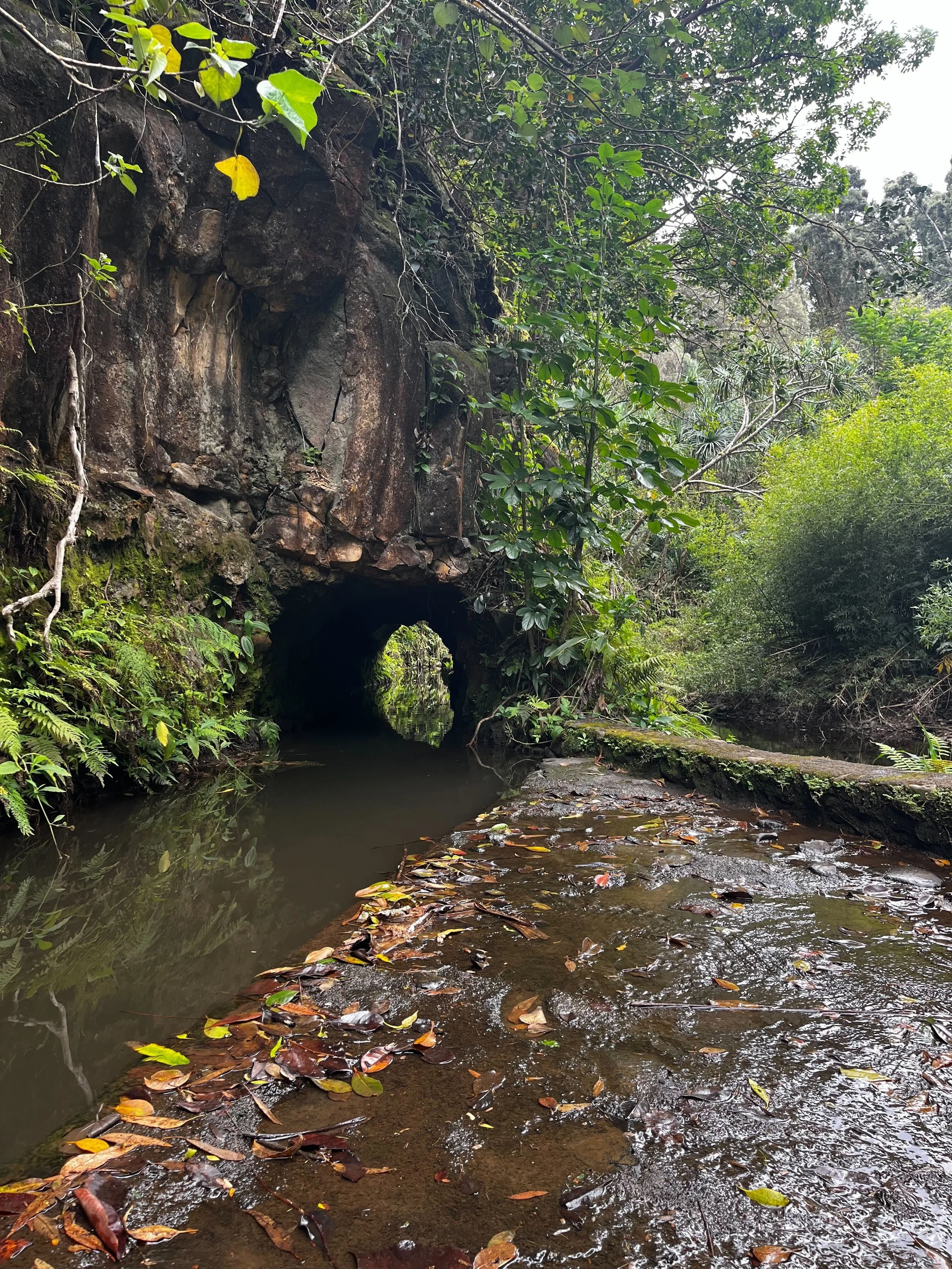
Stream diversion. Photo: Raina Myers
To minimize potential irreparable harm while its final decision is pending, the court temporarily reduced the amount of water Mahi Pono can divert—from an annual average of 35.2 million gallons per day (mgd) to a monthly average of 30 mgd. The court noted that this reduction would not materially impact Mahi Pono’s agricultural operations in Central Maui, as “Mahi Pono will have access to multiple alternative sources of water for irrigation, amounting to an average of 10.87 mgd (7 mgd of groundwater from private wells, 1.60 mgd in surface water gained between Honopou and Maliko, and 2.27 mgd typically not used by the County.” Water delivery to Upcountry Maui was also not affected.
This ruling is consistent with the court’s earlier January decision, which found that the Sierra Club was entitled to a contested case hearing before the issuance of the 2025 permit. In that case, the court determined that issuing the permit without first providing a hearing was the result of a “constitutionally unlawful procedure.”
The Environmental Court also grounded its recent rulings in two prior court decisions in 2025. The Hawaiʻi Supreme Court affirmed in September that the Sierra Club had a right to a contested case hearing for revocable permits issued in 2020. Similarly, an Environmental Court decision in October found that permits issued in 2022 had failed to uphold the public trust.
In the latter case, the court found that the BLNR, in issuing the 2022 permits, failed to protect Native Hawaiian traditional and customary practices; failed to ensure that waters taken from East Maui streams would be used in a reasonable and beneficial manner and not unduly wasted due to “system losses”; failed to hold stream diverters accountable to their burden of proof under the public trust; and failed to protect a dozen streams in Huelo that had been ordered restored by the Water Commission, but that were still being drained dry.
Many of these concerns remain unresolved, underscoring the importance of a full contested case hearing for East Maui stream diversion permits moving forward.
As we await the Environmental Court’s final ruling on the 2026 permits, and the BLNR’s scheduling of a hearing for the 2025 permits (which may be held jointly), you can follow the next phase of this case by attending oral arguments at the Hawaiʻi Supreme Court on July 7 at 2pm.
Arguments will be held at Aliʻiōlani Hale, 417 S King St, Honolulu, HI 96813 and livestreamed at youtube.com/hawaiicourts. This hearing will address the Sierra Club of Hawaiʻi’s challenge to the issuance of revocable permits for 2019 and 2020, and the broader question of how courts can review those permitting decisions. If you’re able, please consider attending or tuning in.