
Hawaiʻi Island Group
Hike Leaders Needed
Do you love exploring the outdoors and sharing its beauty with others? The Sierra Club Hawaiʻi Island Group is looking for passionate individuals to join us as volunteer outings leaders! Our outings leaders guide hikes and service projects that connect community members to the stunning landscapes of Hawaiʻi Island while fostering a deeper appreciation for mālama ʻāina. Whether you’re experienced in leading groups or simply eager to learn, we’ll provide the training and support you need to succeed.
Why become an outings leader?
Inspire others to cherish and protect Hawaiʻi’s unique ecosystems.
Enjoy opportunities to explore new trails and sites.
Build community with like-minded outdoor enthusiasts.
Together, we can make a difference—on the trail and for the planet. If you’re ready to step up and lead, we’d love to hear from you! Email our outings chair, Diane Ware, at volcanogetaway@yahoo.com to learn more.
Let’s explore and protect Hawaiʻi together!
Upcoming Outings
Saturday, September 26, 2026
Puʻu Waʻawa’a Hike – Puʻu Waʻawaʻa Forest Reserve
Moku o Kona —6.5 miles, elevation: 2165’, +/- 1800’.
Considered the oldest land feature on the Hualālai Volcano, Puʻu Waʻawaʻa was created by an eruption that took place around 100,000 years ago. Starting at 9am, we will hike on the Vulcanite Road and the Cinder Cone Trail. At the summit, we will enjoy a sweeping view of the island’s northwest coast. On the way back, we'll pass an abandoned pumice quarry. This hike offers no shade.lease have sun protection – sunglasses, a hat, and sunblock. Bring rain gear, 2-3 L of hydration (water and electrolytes), lunch, and your day-hike essentials. This will be a moderate-to-strenuous hike. To get to the trailhead, look for a turnout on the east side of HI 190 (Mamalahoa HWY, Hawai’i Belt Road), between miles 21 and 22. Enter through the automated gate, then bear left to the dirt lot and shelter. Space is limited, register by contacting Phyllis Chung at phyllischung8@gmail.com or by calling 808-767-3563.
Leader: Phyllis Chung
Saturday, October 17, 2026
Puʻu ʻŌʻō Trail to Powerline Trail Hike – Upper Waiākea Forest Reserve
Moku o Kona —6.5 miles, elevation: 2165’, +/- 1800’.
This moderate to strenuous hike in the Upper Waiākea Forest Reserve Area features lush native forest islands (kīpukas) interspersed with barren lava. Part of the Hawaiʻi Island Birding Trail system, the kipukas are home to many native birds, such as the ʻapapane, ʻiʻiwi, and ʻakiapōlāʻau. We will hike on the Puʻu ʻŌʻō Trail to the intersection with the Powerline Trail. After viewing the Emesine Cave at the viewpoint, we will retrace our steps back to the trailhead. The trails have uneven terrain, barren lava and rough rocks. Please wear sturdy hiking shoes and have sun protection – sunglasses, a hat, and sunblock. Bring rain gear, 2-3L of hydration (water and electrolytes), lunch, and your day-hike essentials. Binoculars are optional. We will meet at 9am at the Puʻu ʻŌʻō trailhead off the Saddle Road between mile markers 22 and 23. Space is limited, register by contacting Phyllis Chung at phyllischung8@gmail.com or by calling 808-767-3563.
Leader: Phyllis Chung
Please note that all outings are subject to the “Leave No Trace Principles” and Rapid ʻŌhiʻa Death (ROD) protocol, which asks participants to wear clean clothes, scrub their boots, and spray boots with alcohol. If possible, complete the protocol before you arrive; however, leaders will have the needed items on hand. We appreciate your kōkua in advance for protecting our precious forests!
Maui Group
Sierra Club Maui Group is Turning 50!
It’s time to celebrate! For 50 years, the Sierra Club Maui Group has worked alongside our community to protect Maui's forests, streams, coastlines, wildlife, and the places we all love. Thanks to the dedication of countless volunteers, advocates, partners, and supporters, we've accomplished so much together—and we're just getting started. Please save the date, Saturday October 10th, to celebrate this incredible milestone with us!
Join us for an afternoon of celebration, community, and inspiration as we honor the past 50 years and look ahead to the next 50. We're planning a fun, family-friendly event featuring: awards, live Hawaiian music, seed ball making, photo booth, Maui Group history display, community booths, potluck lunch, silent auction, and more!
This celebration is truly a community effort, and there are many ways to get involved:
Volunteer: Help us with event setup, registration, activity stations, cleanup, photography, and more.
Bring a Dish: We're planning a community potluck and welcome contributions of salads, sides, desserts, drinks, and other favorite dishes to share.
Host a Booth: Are you part of a nonprofit, community organization, or one of our past partner groups? We'd love to invite you to host an educational or interactive booth showcasing the amazing work happening across Maui.
Whether you've been with Sierra Club Maui since the beginning or recently joined one of our hikes, trail days, or campaigns, we hope you'll celebrate this milestone with us. Together we'll reflect on five decades of protecting Maui's natural and cultural resources—and imagine what we can accomplish over the next fifty years.
Please register here to attend, volunteer, or bring a dish to share. We can't wait to celebrate with you!
Remembering Wai: Highlighting community interest in water issues
By Raina Myers
Last month, over 125 people showed up at the Maui Ocean Center Sphere for a showing of Remembering Wai by local filmmaker De Andre Makakoa. It was inspiring to see so much interest and an incredible turnout for this short film that recently premiered at the Wailuku Film Festival.
The movie opens with De Andre’s passionate recent testimony at the United Nations, where he made connections between the 2023 Lahaina fire and the century-long dewatering of his community during the plantation era.
I loved this quote from De Andre:
“We don’t need AI, artificial intelligence, to solve our problems, we need AI, ancestral intelligence.”
Pre-plantation era Hawaiʻi was a lush landscape of forests, streams, wetlands, and loʻi, supported by the ahupua’a system of land and water management. Wai flowed from mauka to makai, supporting ʻāina and communities along the way. The film looks at the impacts since those systems were disrupted and freshwater was diverted to serve plantation agriculture and now tourism and development.
Remembering Wai brings together ʻike kūpuna, lived experience, ecological science, and the modern conflict over water. It is an emotional look at the aftermath of the Lahaina fire, but it is also a much bigger story about water, land, displacement, and the systems that shape our communities.
For De Andre, the fire was a catalyst to become more involved in these issues. His story connects the tragedy of Lahaina to a much longer history—and to the question of what it will take to build more resilient communities moving forward.
Following the film, De Andre led a panel exploring Maui’s century long water rights fight with local community advocates— Lucienne DeNaie, Hōkūao Pellegrino, and Kekai Keahi.
The panelists shared their own paths into the water rights movement and talked about a fight that has been going on for decades. This is not the work of one organization or one generation. It has involved farmers, cultural practitioners, community members, environmental organizations, and coalitions working together over many years.
Lucienne, who has led many excursions to see the aged water diversion infrastructure, talked about the importance of education and helping people understand the connection between the water they use every day and the streams and watersheds that provide it.
“People can’t care about what they’ve never seen.”
The panelists also reminded the audience that the fight doesn't end simply because water systems come under county or public control. Critical decisions remain regarding management, and especially infrastructure repair and investment. Maui’s water distribution system is leaking millions of gallons everyday, it would be way more cost effective to address this then other proposed ideas to address water issues, like desalination.
Hōkūao shared how his commitment grew out of his connection to kalo and ʻāina. His story was a good reminder that water isn't just a resource or an issue for farmers. It is connected to food, culture, community, and our relationship with the land.
As Hōkūao put it:
“We all have a collective kuleana in this, whether you like it or not. If you live here, you’re visiting here, you’re drinking our water. You’re drinking this island’s water.”
Within the context of Hawaiian culture, it's important to know where your water comes from, how to grow food, having healthy relationships with your neighbors/ʻohana, and maintaining the practical skills that allow a community to take care of itself when it needs to.
Throughout the evening, the conversation kept coming back to wai, ʻāina, kalo, and community. The importance of education and community involvement was a big theme.
The water rights movement has been decades in the making, and it has taken many partners, generations, and coalitions to get to where we are today. There have been some recent victories, but the panel made it clear that there is still a lot of work ahead.
And that work isn't necessarily something that only belongs to people who have been involved for decades.
De Andre ended the evening with a call for all of us to find our own way to contribute:
“Get involved. Do some learning, do some kilo… We all have skills and resources that we can contribute to this fight, whether it’s art, just writing testimony, or sharing with our neighbors and our friends this type of education.”
Mahalo to De Andre Makakoa, Lucienne DeNaie, Hōkūao Pellegrino, and Kekai Keahi for sharing their knowledge and stories; to Maui Ocean Center for welcoming us; to Lahaina Strong for co-hosting; and to everyone who came out to remember wai with us!
If you missed the screening, email Raina.Myers@sierraclub.org to be notified of our next showing.
Upcoming Outings
Sunday, September 27, 2026
Kapalua Lake Loop Trail
West Maui, 3.6 miles
Beautiful hike from Kapalua Village to lovely lake with water lilies, ducks, and a resident black-crowned night heron, and surrounded by Cook pines and orchids. This is a moderate 3.6-mile loop hike on mostly paved paths with 800' elevation gain and loss. Park in lots on either side of Village Road at the intersection of Office Road in Kapalua Village. There are restrooms in the Bay Course Club House near the trailhead. Bring snack/lunch, water, and reef-safe sun protection.
Leader: Annie Schultz, acm_schultz@hotmail.com
Sign up
Saturday, October 3, 2026
Old Haleakalā Trail
Haleakalā, 5 miles
Hike down the segment of the Old Haleakalā Trail from Crater Road to the top of Olinda Road, on the path described by Jack London and Mark Twain. We will meet at the Waihou Spring Trailhead near the top of Olinda Road and shuttle to the top. The hike is almost all downhill with some rocky areas in the beginning, and then mostly pasture land. Here is a video that shows where access to trail is allowed: https://youtu.be/8pHpIbJ_Ic8. Although this is a relatively short hike, it is rated moderate/strenuous because of some steep gulch traversals and the 2,500' elevation change. Please print, sign and bring with you the Haleakalā Ranch waiver for the outing. Wear sturdy footwear and bring a lunch.
Leader: Rob Weltman, robw@worldspot.com
Sign up
Sunday, October 4, 2026
Lualaʻilua Hills Trail in Kahikinui Area
Kahikinui, 5 miles
Strenuous. Explore traditional trails used over centuries in remote Kahikinui. Native plants. Cultural sites. Magnificent views. Open, mostly unshaded area. Bring lots of water, a hat, sturdy footwear, and lunch. Meet at 7am in Pukalani Terrace Shopping Center near Ace Hardware. Limit 12.
Leader: Mark Short, shortonmaui@gmail.com
Sign up
Saturday, October 24, 2026
Kōkua Day at Fleming Arboretum, Pu‘u Mahoe
ʻUlupalakua, 1 mile
Help maintain the Fleming Arboretum at 2600 feet in Ulupalakua, sanctuary to many endangered native dry land forest plants. Awesome views of La Perouse (Keone'o'io) coast and Kahoolawe. Bring a light jacket, lunch and gloves. It is recommended to have shoes with ankle support in case we are working on uneven ground. Meet 9am at the Ulupalakua Ranch Store. Estimate 3 hours of work. Refreshments available. A BYO lunch will be at the Fleming cabin with a great view of South Maui. Limit 20.
Leader: Rob Weltman, robw@worldspot.com
Sign up
Saturday, October 31, 2026
Mālama Hāmākua Service Outing
Hāmākua, 1 mile
Join us for “Kōkua Days” with Mālama Hāmākua Maui as we care for the Hāmākualoa Open Space Preserve. Workdays are held every last Saturday from 9:00–11:30 am, followed by lunch and fellowship. This Saturday we will be clearing legacy trash out of cool and shaded Konanui gulch, to prepare for native plant restoration efforts. All tools and supplies provided. All ages can kōkua.
Leader: Lucienne de Naie huelogrl@icloud.com
Sign up
Oʻahu Group
Neighborhood Board Considering Recognition/Designation for Wāwāmalu Beach
By Reese Liggett, Oʻahu Group Outings Leader
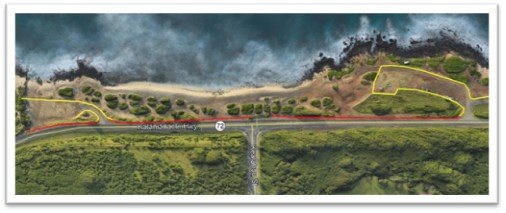
Kaiwi State Scenic Shoreline. Vegetation shown not representative of 2026—much more native fauna is grown in due to boulder barrier protection. Photo: Reese Liggett
Many existing maps call it Wāwāmalu Beach, while other sources call it Wāwāmalu Beach Park. Yet the City's Department of Parks and Recreation (DPR) places no park sign on it and considers it a mere northeast section of Sandy Beach Park.
Yet Wāwāmalu’s natural, undeveloped condition (no pavement, restrooms, lawn, or lifeguards) is completely unlike DPR’s Sandy Beach Park. Oʻahu Group’s monthly conservation outings have found the public doesn’t understand the intended nature of the preservation area behind the “boulder barrier" established in 2021, due to Sierra Club’s activism and Council Chair Tommy Waters’ leadership. However, illegal activities continue to be a problem, as motorized bikes, concrete dumping, and feral cat feeding persist.
Perhaps this idyllic coastal gem will get the respect it deserves if the public understands its purpose and value by adding a descriptive name on signage.
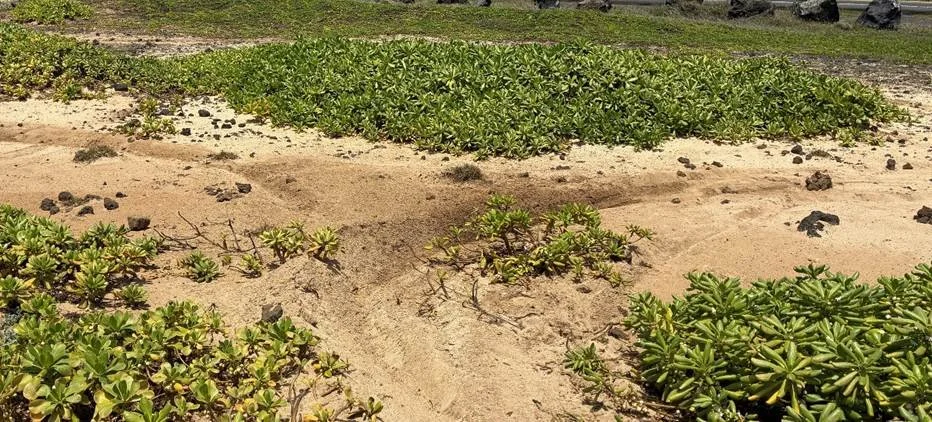
Motorized bike damage (8/26/2026). Photo: Reese Liggett
Hawaiʻi Kai Neighborhood Board No. 1 is hearing a proposal to ask the City to upgrade Wāwāmalu’s status and consider a name change . The three to four acres of uniquely natural, undeveloped coastline would be identified as “Awāwamalu Preserve”; or another name that connotes its historic nature and role in the City’s parks lineup. This position came out of discussion at a meeting of the neighborhood board’s Parks Committee on August 11.
Formal consideration by the full Neighborhood Board will take place at its October 27 meeting. Awāwamalu is the area’s name from before colonization and would be an appropriate revival to honor its conservation and historic significance.
Whatever form the name takes on future signage, its purpose will be to inform the public of the importance of this coastal native habitat with deep cultural significance to Native Hawaiians.
Āwāwamalu is a special place where over the past several years, Sierra Club volunteers have spent hundreds of hours removing invasive plants to make room for native plants and wildlife; making way for a nature preserve where the public can enjoy natural tranquility.
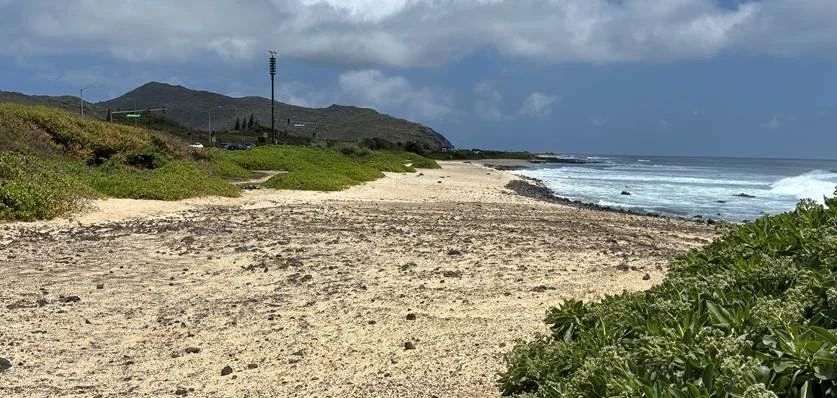
Āwāmalu Beach. Photo: Reese Liggett
Upcoming Outings
Sunday, September 27, 2026
Pālehua ʻElepaio Enclosure ʻĀkupu Service
We will be clearing alien invasive plants like lantana, strawberry guava, lilikoʻi, thimble berry, coarse asparagus fern, trail building, out-planting and watering native plants to restore the native habitat for the endemic Oʻahu ʻelepaio. Space is limited as we will be working in a sensitive area where the endangered native ʻelepaio is nesting and there are some native plants already growing which we don’t want to disturb or damage. We may hear and see some native ʻelepaio as we work in the area, so bring a camera as well. Bring gloves and hand tools for weeding alien plants if you have any. Pack water and a snack and definitely mosquito repellent. We plan to meet in Makakilo at 8:30am and finish by 1pm. Reservations required at least one week prior. Contact Clyde Kobashigawa, clydekobashigawa@hawaii.rr.com, for reservations with first and last name and phone number. Please indicate any person who is a minor.
Leaders: Clyde Kobashigawa and Curtis Kawamoto
Sunday, October 4, 2026
Mālama Tree Crew: Ala Mahamoe
Recognizing the crucial role of protecting Hawaiʻi's watershed in preserving its unique ecosystems and providing fresh water resources, we continue to care for the area where the Sierra Club Oʻahu Group and its partners planted over 1,000 trees. Our efforts will involve watering, weeding, and clearing debris to ensure these young trees thrive. Meet us at 8am by the gate located between 1800 and 1812 Ala Mahamoe St. To ensure you're prepared, please wear long pants, a long-sleeve shirt, water, a hat, sunscreen, gloves, and covered shoes. Bringing your favorite tool is optional as others will be available. We anticipate finishing our work between 10:30am and 11am. Reservations are required at least one day prior. Contact: sherrycassetta@gmail.com to RSVP with your full name and phone number.
Leaders: Randy Ching and Sherry Cassetta
Sunday, October 11, 2026
Makiki Loop & Viewpoint
Meet at 8am at the Makiki Baseyard gate. Wear closed toe shoes. Bring 1 liter of water, snack. Insect repellent recommended. We will hike 5 miles starting at the Hawaiʻi Nature Center, Maunalaha Trail, Puʻu ʻUalakaʻa Trail, viewpoint of South Shore, backtrack to Maunalaha. Then continue on to Makiki Valley Trail, Kanealole Trail, and end back at the Nature Center. RSVP and sign waiver here
Leader: Randy Ching