
Group News: Hawaiʻi Island Group, Maui, and Oʻahu
Hawaiʻi Island Group
Upcoming Outings
Saturday, January 17
Mauna Ulu and Puʻu Huluhulu Hike (E/C/F)
Hawaiʻi Volcanoes National Park, Keauhou, Moku o Kaʻū
4 miles, elevation: 3200’, +/- 375’
On this hike, we will experience a landscape formed over a five-year eruption period – one of the longest known rift-zone eruptions of Kīlauea. We will start on the Napau Crater Trail to Puʻu Huluhulu, and take in the spectacular panoramic view from the overlook. We will then hike to Mauna Ulu via a perched lava pond. Hiking boots recommended. Bring rain gear along with your day-hike essentials. This will be an easy-to-moderate hike. ROD protocol, please. We will meet at the Mauna Ulu Parking Lot off the Chain of Craters Road. Register for the hike by calling Phyllis Chung at 808-767-3563.
Managed Decline of Fossil Fuels
By Stephen Holmes, HIG ExCom Member & Former US Department of Energy National Energy Champion
It was surprising to hear Governor Josh Green move toward LNG at a time when energy experts agree that fossil fuels are now in a state of managed decline, with investors shifting away rapidly. Global markets are awash in oil and gas, with prices often too low to cover production costs. LNG, or liquefied natural gas, actually carries a premium, as it requires an enormous amount of energy to liquefy it, followed by additional losses during long-distance transport to markets like Hawaiʻi. The infrastructure needed to support LNG also comes with a massive price tag, and ultimately, ratepayers would be the ones footing the bill.
LNG solves none of Hawaiʻi’s core energy challenges. It is not a transportation fuel for jets, cannot power our existing fleet of cars or trucks, and does nothing to advance the transition already underway toward electric vehicles. Even shipping is beginning to electrify, including oil tankers, as new low-cost, high–energy-density batteries make this shift increasingly viable.
Meanwhile, solar power in Hawaiʻi is more than capable of meeting our grid needs, at a fraction of the cost and time as fossil fuels. Some of this growth will come from utility-scale solar with battery storage, but a major and often overlooked opportunity lies in decentralized energy. Third-party financing tools such as energy savings performance contracts and power purchase agreements are about to create a solar boom. Federal tax incentives for commercial projects are still good for the next few years, and by the time they sunset, cheaper batteries are likely to make those incentives unnecessary. Attempts by utilities to simply fuel-switch aging fossil plants cannot compete.
Decentralized solar offers enormous benefits. It reduces demand on the grid, eliminates the need for new transmission infrastructure, and avoids line losses by generating power exactly where it’s needed. Batteries reduce peak demand, third-party ownership eliminates upfront costs, and no costs are passed on to the grid. This model accelerates the retirement of old, expensive power plants, attracts major investment to Hawaiʻi’s economy, and creates good-paying local jobs. Decentralized energy represents a huge opportunity.
Managing the decline of fossil fuels, while keeping the lights on and existing gas-powered vehicles operating during the transition, will not be simple. But we cannot allow elected officials to sell out Hawaiʻi’s future in an attempt to delay the inevitable.
Hike Leaders Needed!
Do you love exploring the outdoors and sharing its beauty with others? The Sierra Club Hawaiʻi Island Group is looking for passionate individuals to join us as volunteer outings leaders!
Our outings leaders guide hikes and service projects that connect community members to the stunning landscapes of Hawaiʻi Island while fostering a deeper appreciation for mālama ʻāina. Whether you’re experienced in leading groups or simply eager to learn, we’ll provide the training and support you need to succeed.
Why become an outings leader?
Inspire others to cherish and protect Hawaiʻi’s unique ecosystems.
Enjoy opportunities to explore new trails and sites.
Build community with like-minded outdoor enthusiasts.
Together, we can make a difference—on the trail and for the planet. If you’re ready to step up and lead, we’d love to hear from you!
Email our outings chair, Diane Ware, at volcanogetaway@yahoo.com to learn more.
Let’s explore and protect Hawaiʻi together!
Maui Group
Maui Group Celebrates 50th Anniversary Celebration in 2026 With Update of Group Archives
By Lucienne de Naie, Maui Group Chair
In 1968, renowned nature photographer and travel writer Robert Wenkam helped found the Hawaiʻi Chapter of Sierra Club. Eight years later, in 1976, a small group of dedicated conservation advocates formed a Maui County branch of the nationally respected environmental organization. Hugo Huntzinger, Bud Aronson, John Bose II, Dr. James Fleming, Dr. David Brown, and Angela and Cameron Kepler officially launched the Sierra Club Maui Group that year.
The early success of the Maui Group was rooted in the founders’ deep expertise and commitment. Hugo Huntzinger (1934-1995) served as the popular superintendent of Haleakalā National Park from 1974-1987 and chaired the Maui Group in its formative years. Herbert “Bud” Aronson (1924-2021), a Haʻikū resident, was the group’s first chair. He was a former Stanford University professor, a WWII Marine stationed on Maui, and labor organizer with ILWU in Hawaiʻi.
John Bose II (1927-1994), an agricultural researcher, naval veteran, and Haʻikū resident, served as the Maui Group’s early Conservation Chair and later chaired the group during the early 1980s. Bose also founded the Maui Environmental Information Center in 1971 and was appointed to the statewide Environmental Council in the early 1980s. Dr. James Fleming (1908-1987), son of legendary Maui agricultural pioneer and conservationist David T. Fleming, was a devoted physician as well as an avid hiker and conservationist.
Dr. Angela Kay Kepler Rust, a noted author and native bird specialist, and her then-husband, ornithologist Dr. Cameron Kepler, were researchers with the US Fish and Wildlife Service when they helped establish the Maui Group. Dr. David Brown, the youngest of the founding members, focused his efforts on launching the group’s well-enjoyed hiking program. Dr. Brown remains an active explorer of Maui’s trails and a steadfast advocate for public trail access.
From the outset, the Maui Group faced a wide array of urgent environmental challenges. Proposals included rezoning part of the iconic Puʻu Ōlaʻi conder cone in Mākena for hotel development, despite state plans for a large wilderness park. Developers sought to build a commercial underwater theme park along the Lahaina pali, ferrying visitors via submersible craft from Maui’s expanding hotel industry. Large-scale tourism developments in Wailea and Mākena moved forward with limited consideration of environmental impacts, and a commercial oil tanker harbor was proposed within the Keʻālia Pond wetlands.

The Maui Group responded with well-researched testimony on these and many other issues and, in some cases, pursued legal action. Notably, the group challenged the proposed Maui Prince Hotel development fronting Māluaka Beach in Mākena in 1979.
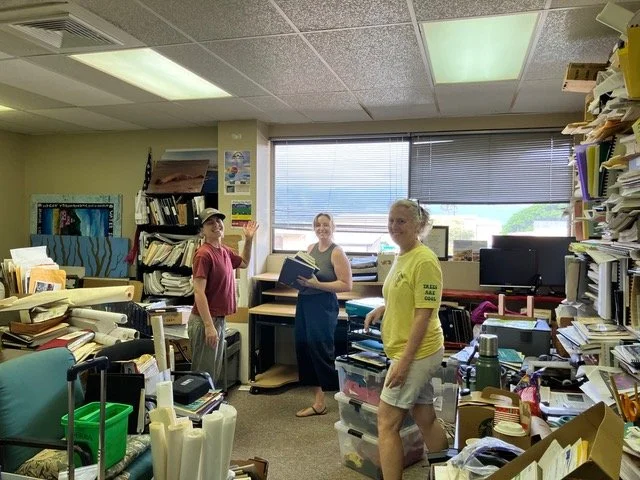
Naturally, after five decades of conservation and advocacy work, the Maui Group has amassed a huge archive of documents, maps, and historical materials. “We are dedicating this year to going through our archives,” explained Maui Group Conservation Co-chair Scott Werden. “We want to let folks know what’s available for their research and get a lot of our records digitized.”
Werden is also a part of the Sierra Club team behind Wiki Wai (wikiwai.org), a comprehensive online resource focused on Maui’s water issues. He hopes to add more water-related reports, maps, and documents from the large collection housed at the Sierra Club’s Kahului office.
Volunteers have also begun cataloging the Maui Group’s extensive map collection to create a full list of what’s available both in digital and hard copy form. Summer Wong, a Maui resident and researcher with the UH Mānoa Water Resources Research Center, has been reviewing the water-related documents to help build a comprehensive database. “There are some treasures here,” Wong offered. “There is so much we can learn from as we try to set current water policies.”
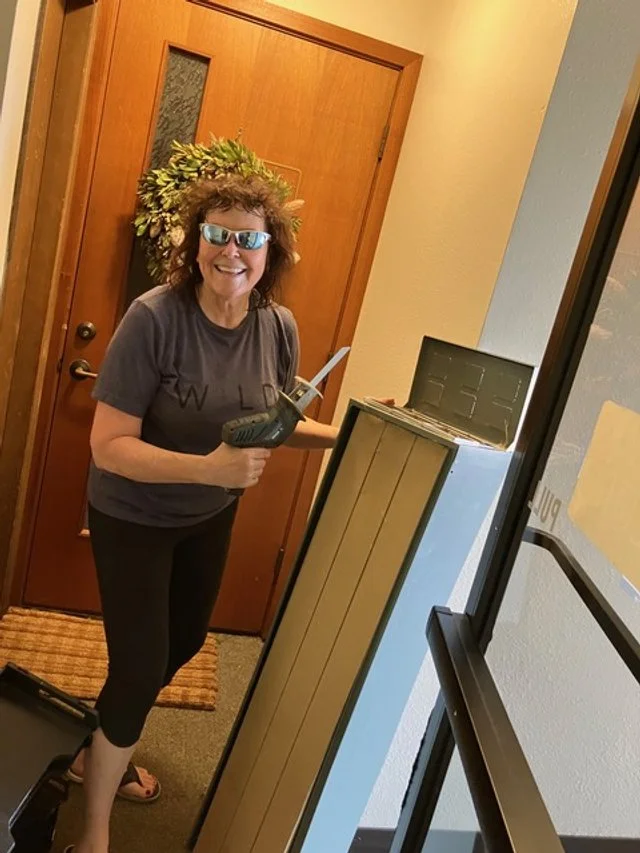
Archive organization and general office clean up will continue throughout 2026, and volunteers are welcome. Flexible access hours are available, and no prior experience necessary. To get involved, contact Lucienne de Naie at huelogrl@icloud.com.
In addition, Maui Group Executive Committee members are also forming a committee to plan a 50th anniversary celebration later in the year. The free event will feature food, displays, music, awards and inspirational presentations. Want to volunteer to be part of the fun? Contact Raina Myers at raina.myers@sierraclub.org.
Upcoming Outings
Thursday, January 15
Honolua Conservation Easement Work and Hike (C/E/S)
West Maui, 3 miles
Join us for a fun day (9am-1pm) in the Honolua Conservation Easement. We will do some light field work, take a three mile hike with great views and 400' elevation gain, and learn more about native Hawaiian plants and the watershed that captures our water. Meet to carpool at 8am at the commuter parking lot on the southwest corner of North Kihei Road and Honoapiilani Highway near Māʻalaea or meet at 9am at the Honolua white bridge across from Honolua Bay (in Apple or Google maps, the address is 6860 HI-30). Please wear closed shoes, like sneakers or boots, and bring a water bottle, a snack, and sun protection. Limit 25.
Leader: Annie Schultz, acm_schultz@hotmail.com or 808-344-6628
Sign up
Friday, January 16
Wahi Pana of Palauʻea Archaeological Hike (C/E)
South Maui, 2.5 miles
Palauʻea lands of the Wailea 670 archaeological preserve have a number of wahi pana or places with deep spiritual significance. This hike takes us into an area with a ceremonial enclosure; ahupuaʻa boundary markers and rare stepping stone trails. We will have archaeologist Dr. Jeanne Schaaf along to offer insights. Be prepared for rugged terrain with some overgrown areas with thorny bushes. Long pants are strongly recommended! Please note: No donations are taken by Maui Group for hikes on Honuaʻula Partners land.
Leader: Lucienne de Naie, huelogrl@icloud.com
Sign up
Saturday, January 24
Hiking and Yoga Along the Hoapili Trail (E)
South Maui, 2 miles
Join us for a hiking & yoga experience along the Hoapili Trail (King's Highway). We will step back in history and follow part of the King's Highway from La Perouse Bay. This will be a 2 mile roundtrip hike along the shoreline with beautiful views of the ocean. As the sun is setting, Meeyoung will lead us in a 30 minute all levels standing yoga practice...no yoga mat or props needed. We may practice on sand or rocks, so wear sturdy shoes (sneakers ok). Bring snacks, sunscreen, hat, and any gear you may require. There is only one restroom at the beginning of the hike so please plan accordingly. We will meet at the La Perouse Bay Parking lot at 4:30pm. Limited to 15 people.
Leader: Meeyoung Lepore, hikewithaloha@gmail.com
Sign up
Sunday, January 25
Waiehu Coastal Tour (C/E)
Wailuku Moku, 2.5 miles
Shoreline tour along Ka'ehu Bay - spanning the area between Wailuku river and Waiehu stream. Portions of the land are managed by the Kaʻehu nonprofit stewardship team. Inspiring to view the reemergence of these ancient taro growing lands and experience the dramatic north shore views. Terrain can vary for sandy or rocky coast to muddy wetland trails.
Leader: Lucienne de Naie, huelogrl@icloud.com
Sign up
Saturday, January 31
Hāmākua Mālama Service Outing (C/E/S)
Ha‘ikū, 2 miles
Help clear away abandoned rubbish from gulches in Ha‘ikū’s Hāmākua Coastal Preserve and re-plant native species. Tools, snacks, trash bags etc will be provided. Take Hahana road from Hāna Highway and turn right at the signage for Mālama Hāmākua. See https://maps.app.goo.gl/PPSaE9QpyLeSWCLXA. Co-sponsored by Mālama Hāmākua
Leader: Lucienne de Naie, huelogrl@icloud.com
Sign up
Saturday, January 31
Hawaiʻi Land Trust Nuʻu Refuge Work and Hike (C/E/S)
Kaupō, 1 miles
Join us for a fun day of field work and guided hiking at Hawaiʻi Land Trust's Nuʻu Refuge in Kaupō. We will do some native tree and shrub planting and weeding from 9am to 12pm, and then join Scott Fisher for a guided hike around the property. Meet to carpool at 7:30am at Pukalani Terrace Center near Ace Hardware or meet at 9am at Nuʻu Refuge (Nuʻu Bay in Google Maps). Coming from ʻUlupalakua, it is about 2/10 of a mile before Mile Marker 31 on the Piʻilani Highway in Kaupō. Please wear closed shoes, like sneakers or boots, and bring a water bottle, a snack, sun protection, and gardening/work gloves if you have them. Limit 60.
Leader: Annie Schultz, acm_schultz@hotmail.com or 808-344-6628
Sign up
Oʻahu Group
Five Years of Protection and Conservation at Oʻahu’s Wāwāmalu Beach
By Reese Liggett, Oʻahu Group Outings Leader
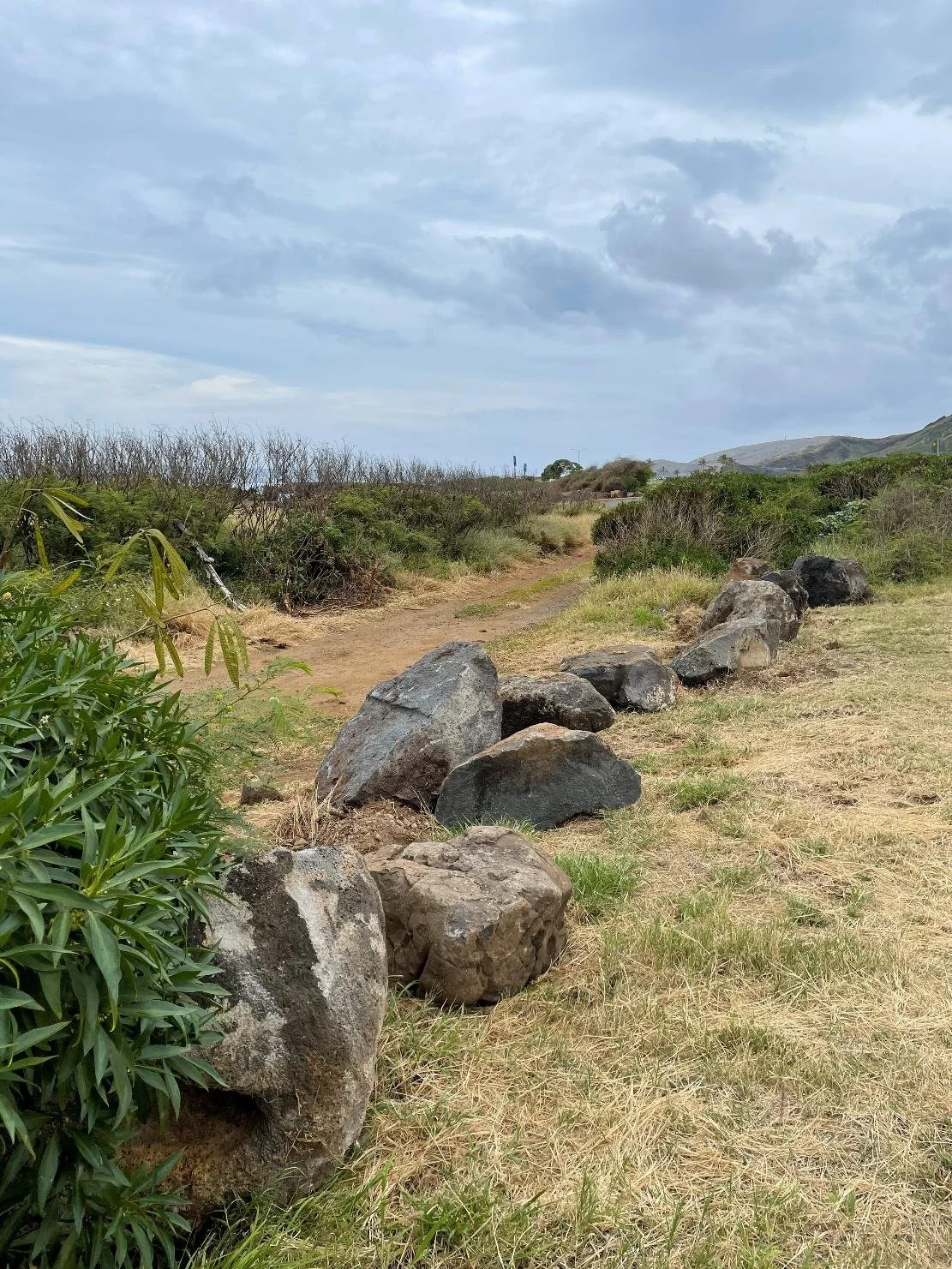
Boulder barrier. Photo: Reese Liggett
January 2026 marks five years since a boulder barrier was installed at Wāwāmalu Beach (just northeast of, and adjacent to, Sandy Beach Park) along the Kaiwi coast, named for the Kaiwi Channel between Oʻahu and Molokaʻi. Wāwāmalu is a somewhat forgotten place name; earlier known as Āwawamalu, meaning shady valley, it once referred to the broader area stretching from Sandy Beach Park to Makapuʻu.
Today, Wāwāmalu Beach is often identified on maps as the undeveloped coastal area makai of the signalized intersection at Kealahou Street and Kalanianaʻole Highway. It features native-planted dunes and a wide, beautiful white-sand beach—great for walking, sitting, and surf gazing, though generally too rocky for swimming. Hawaiian monk seals are known to bask and give birth here. For decades, however, this fragile landscape was repeatedly damaged by off-roading trucks, and even sedans, driving through the dunes.
The installation of the boulder barrier in early 2021 was the result of more than two decades of political activism by Sierra Club Oʻahu Group members and allies, dating back to 2001. The effort was:
Championed by Honolulu City Council Chair Tommy Waters, following his District 4 election in March 2019, in response to strong advocacy from Sierra Club activists;
Advanced by a Hawaiʻi Kai Neighborhood Board resolution in fall 2019, which formally urged city action;
Supported by sustained advocacy from Livable Hawaiʻi Kai Hui and the Surfrider Foundation; and
Cited in Honolulu Star Advertiser’s “Kokua Line: East Oahu beach suffers from chronic off-roading” by Christine Donnelly in 2020.
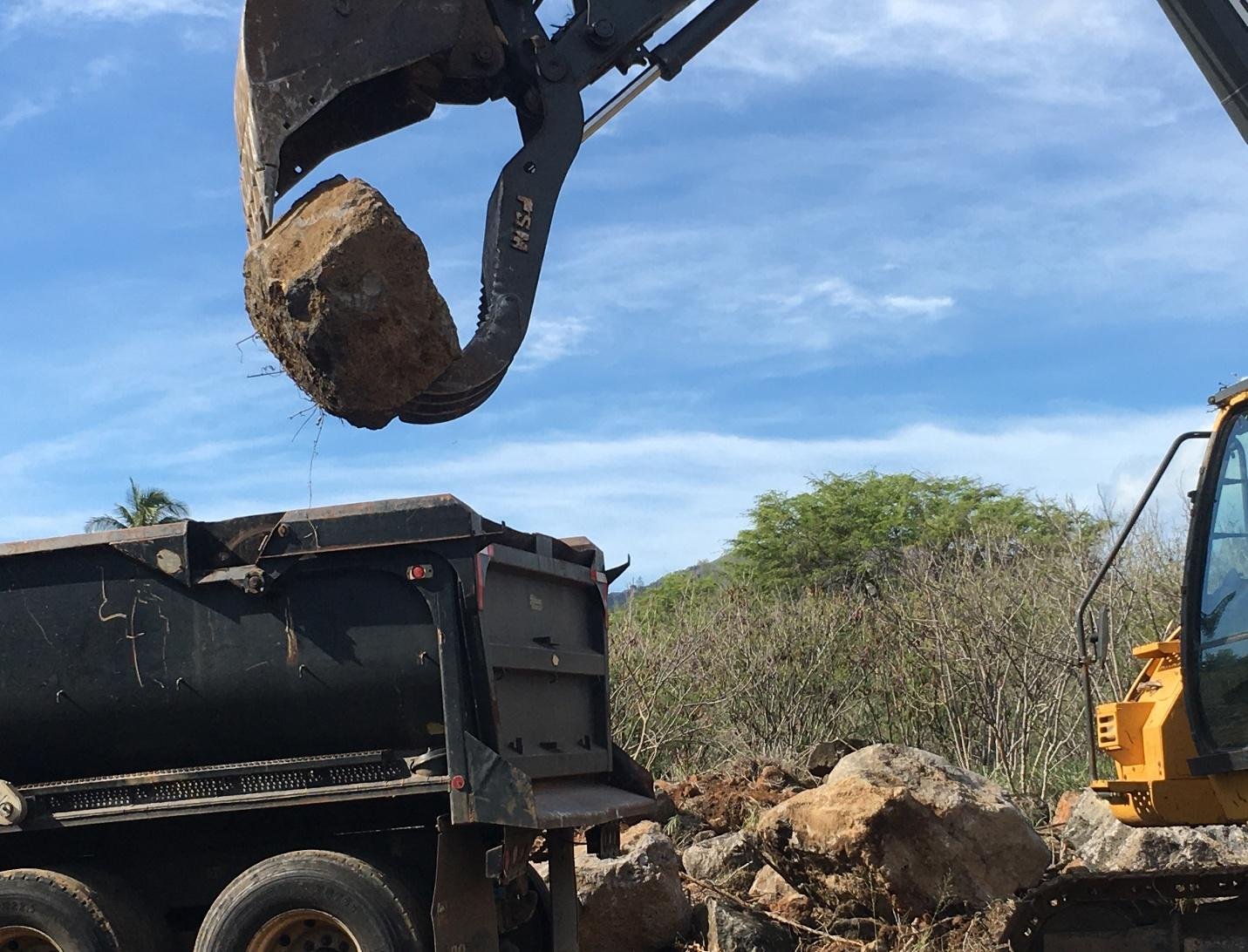
Boulder installation. Photo: Reese Liggett
Funding for the vehicle barrier was included in the City’s 2020–2021 budget, and its installation was made possible by a development permit issued during the Caldwell Administration in fall 2020. The barrier was ultimately installed in phases during January and April 2021 under the direction of Laura Thielen, then Director of Parks and Recreation in the incoming Blangiardi Administration.
The boulders themselves were sourced from Kaiwi State Scenic Shoreline lands roughly a half-mile away. These rocks had been stockpiled decades earlier by Henry J. Kaiser during the development of Hawaiʻi Kai and Kalama Valley. The only direct costs associated with the barrier were equipment rentals, excavators, dump trucks, and front loaders, to select, transport, and place the boulders along a painted alignment provided by Sierra Club activists. Those boulders remain firmly in place and on the job today.
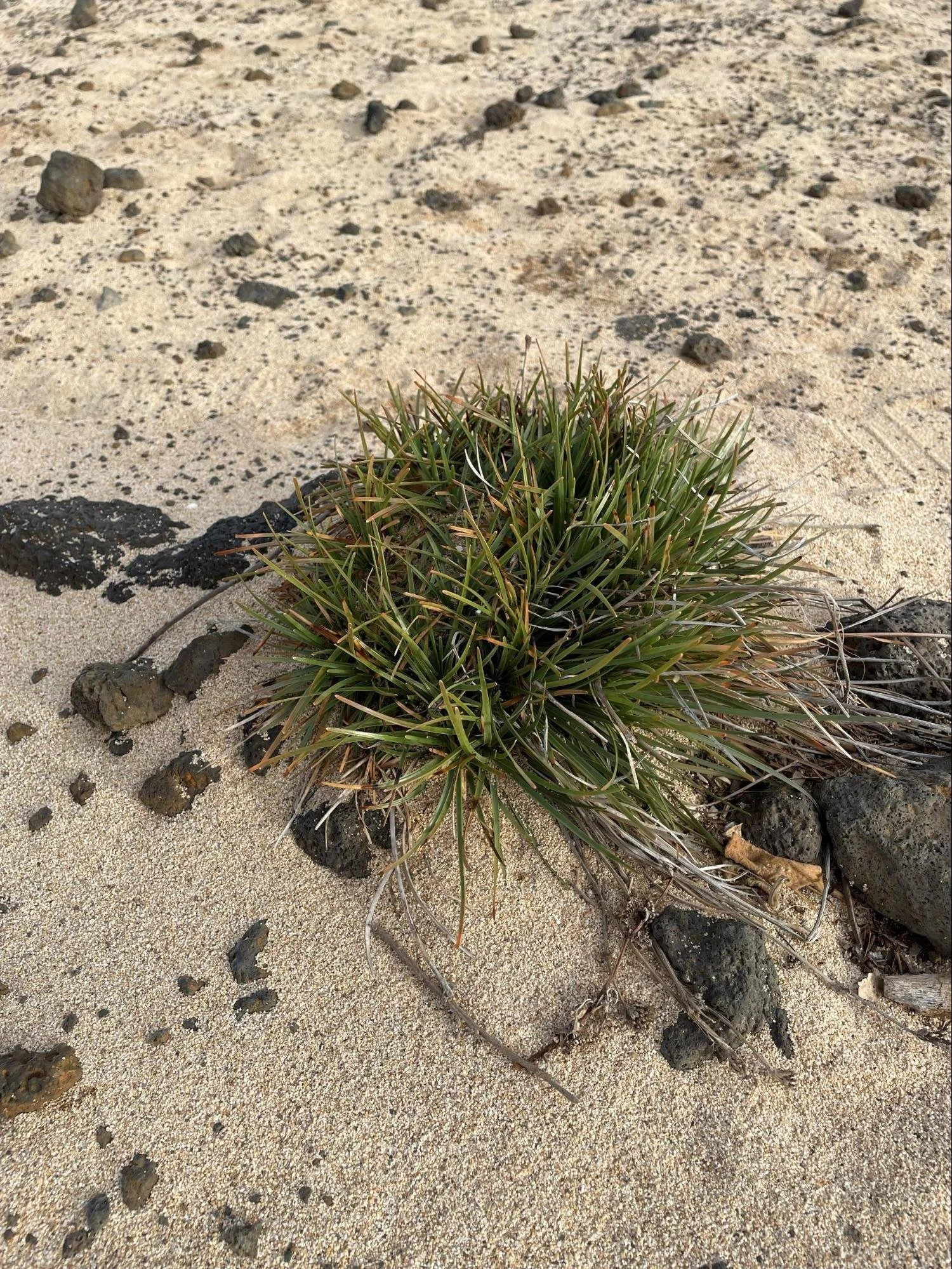
Maʻu ʻakiʻaki. Photo: Reese Liggett
Since the barrier’s installation, very few four-wheel vehicles have managed to breach it and drive onto the beach or dunes. However, two-wheeled motorized vehicles continue to illegally enter the area, violating Revised Ordinances of Honolulu Chapter 10 and damaging native plants while posing threats to basking monk seals. In addition, individuals feeding feral cats, also in violation of park rules, continue to support populations that spread toxoplasmosis, a disease lethal to monk seals and porpoises. While cat advocates often cite spay-and-neuter efforts, the ongoing toxoplasmosis risk to endangered wildlife remains largely unaddressed. Members of the public are encouraged to actively report violations involving motorized vehicles or cat feeding by calling (808) 529-3111.
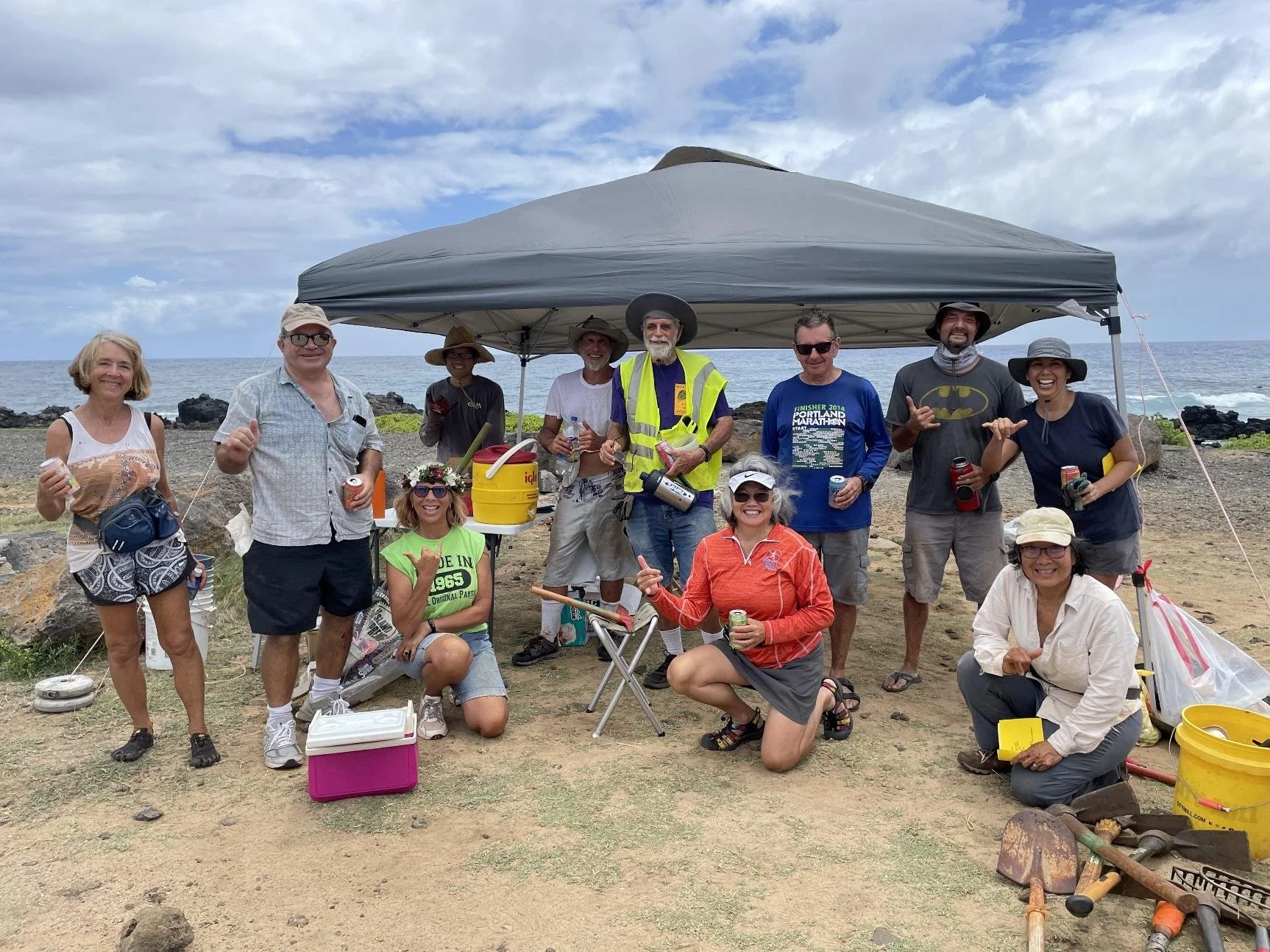
Since October 2022, more than 600 volunteers have participated in 39 monthly conservation workdays—typically held on the third Sunday of each month. These outings have focused on removing invasive plants, collecting and sowing native seeds, and planting native coastal species sourced from other parts of Oʻahu, including the native sedge mauʻu ʻakiʻaki (Fimbristylis cymosa).
The primary invasive species targeted have been koa haole, now approximately 95% cleared, and buffelgrass, a highly aggressive African grass that remains the greatest obstacle to native plant recovery and a serious wildfire hazard.
Looking ahead, opportunities to participate in hands-on conservation at Wāwāmalu Beach will continue most months on third Sunday mornings. Upcoming outings are always listed on the Sierra Club Oʻahu Group’s hikes and outings calendar here.
Upcoming Outings
Sunday, January 18
Wāwāmalu Service Project
Join us for Third Sunday at Wāwāmalu. Limited to 25 participants out of concern for the delicate planting environment. Participants under 18 require a parent or guardian. We will be encouraging native vegetation through weeding, native seed gathering, and sowing, as well as offering interpretation of the native ecosystem for those interested. Please bring closed toe shoes or boots, gloves, sunscreen and a water bottle. Meet at 9am, finish at noon. Water for refills will be provided.
Contact wrliggett@yahoo.com to RSVP.
Leader: Suzan Harada and Reese Liggett