
Legislative Session Preview: What’s at Stake for Hawaiʻi in 2026
By Wayne Tanaka, Chapter Director and Kirsten Kagimoto, Chapter Deputy Director | Reading time: 3.5 minutes
Next Wednesday, January 21, the Hawaiʻi State Legislature will reconvene to consider laws and policies with the potential to shape our island home for generations to come. With 2026 being an election year, legislators may be particularly responsive to community engagement, including on several key issues that are set to take center stage—bringing opportunities for transformative action and a more resilient future for Hawaiʻi:
Water Resources
After decades of political interference undermining the Water Commission’s work, including in the wake of the Lahaina tragedy, proposals were finally put forward to reduce its vulnerability to political pressure from the Governor’s office. As the Commission is soon anticipated to tackle hot-button issues including its issuance of water use permits for West Maui, revisiting its permitting decisions in Nā Wai ʻEhā as ordered by the Hawaiʻi Supreme Court, the proposed designation of Waiʻanae as a water management area, and stream flow restoration decisions across the islands, the need for greater political insulation is even more critical.
In addition, recent developments reflecting the Navy’s continued denial, misdirection, and gaslighting in responding to the Red Hill catastrophe call for measures to increase the transparency and accountability of supposed watchdog entities like the Fuel Tank Advisory Committee.
Invasive Species and Biosecurity
Hawaiʻi’s invasive pest crisis continues to worsen. Coconut rhinoceros beetles have begun spreading out of West Hawaiʻi, have munched their way across Oʻahu, and are now well established on Kauaʻi—where conditions increasingly mirror those on Oʻahu. Meanwhile, little fire ants continue to infiltrate new communities on Oʻahu, Maui, and Kauaʻi; octocorals continue to spread in Puʻuloa; and other pests like the queensland longhorn beetle threaten to deepen the crisis every day.
With the new Department of Agriculture and Biosecurity not living up to its name, accountability and interventions to break its pattern of long-standing delays and inaction may be absolutely critical for our ʻāina. Enhanced biosecurity measures, including support for the Hawaiʻi Invasive Species Council and the island invasive species committees, research and quarantine facilities, and investments in community-driven invasive species management and eradication efforts will also be critically needed in the absence of action by the Department.
Military Live-Fire Training
Despite community calls for the Army to comply with well-established legal processes in its quest to “retain” Hawaiian lands for the continued bombing, burning, and contamination of ʻāina, Governor Green has persisted in his pursuit of a fast-tracked, uninformed, and half-baked land deal at the request of Army Secretary Dan Driscoll. Whether and how the legislature responds to competing demands from both the Governor and the constituents they serve with regards to military live-fire training is unclear, but discussions around this issue are almost certain to take place.
Housing, Development, and the Environment
We continue to stand in strong defense of the Hawaiʻi Land Use Commission, ensuring it retains the authority and expertise needed to navigate and balance the complex public interests affected by large-scale developments. We also will work to ensure the safety and resilience protections in our building code are not compromised in an effort to fast-track development for unaffordable housing.
Climate Resiliency & Clean Energy
The impacts of climate destabilization are already being felt and will only intensify. Hawaiʻi must stay on course toward its clean energy goals by investing in energy sources that are truly clean, renewable, and safe. That means rejecting a return to dirty, expensive, and dangerous fossil fuels like liquefied natural gas, and refusing to gamble our livelihoods on high-risk technologies such as nuclear power.
Get Involved This Session
Our staff and volunteers are ready to sift through the thousands of bills to track measures in our priority areas once they are introduced in a couple of weeks. Want to join in the fun? Take a look at our Volunteer In-District Lobby Program here, sign up for our Hawaiʻi CapitolWatch email alerts here and bookmark our action alert page here.
Also consider signing up for the Environmental Legislative Network, a network for activists, community leaders, students, professors, elected officials, and others to share news and calls to action regarding Hawaiʻi’s natural and cultural public trust resources - simply email us at hawaii.chapter@sierraclub.org to be added to the ELN email list.
ELN Member Priorities - 2026
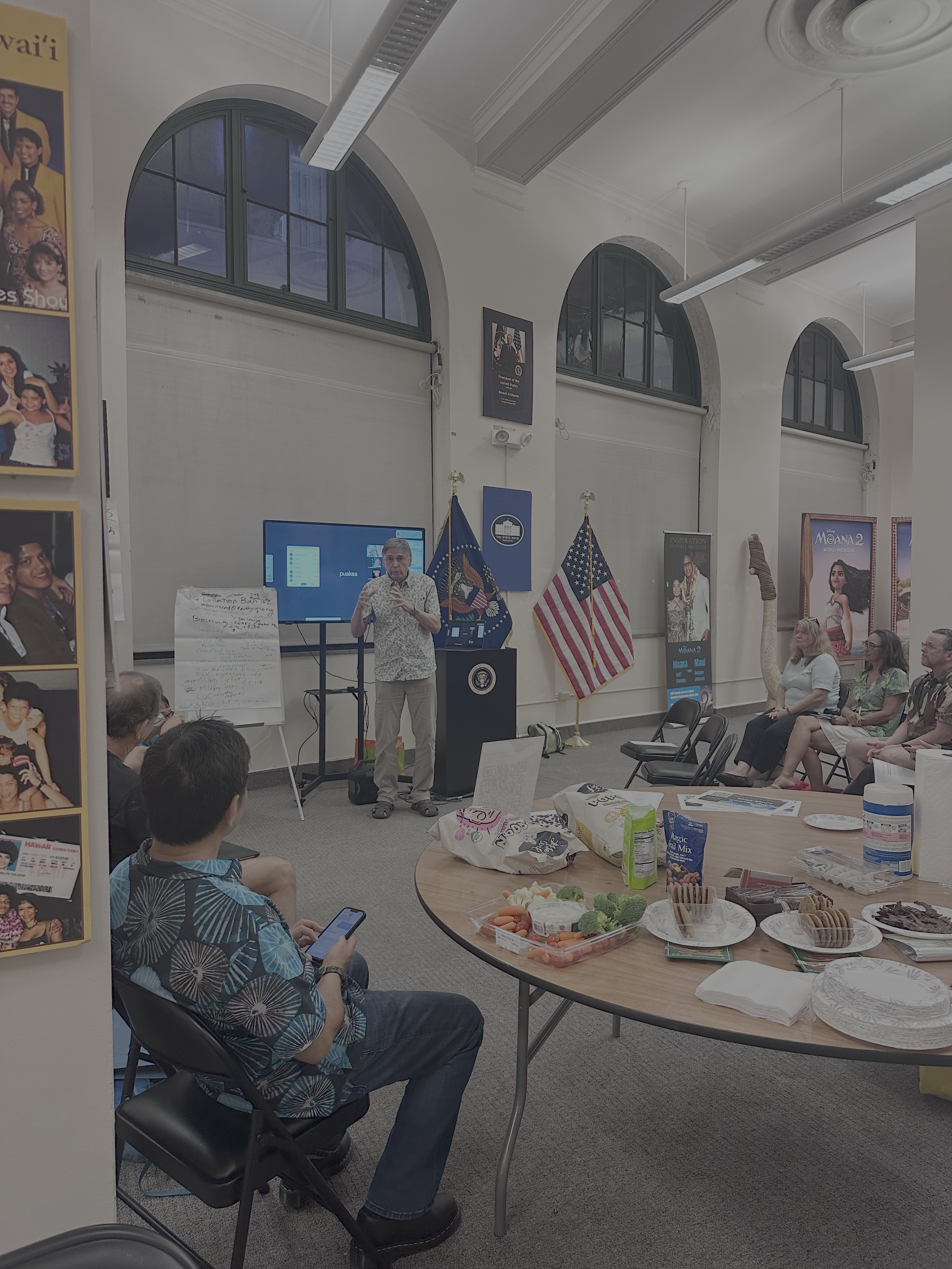
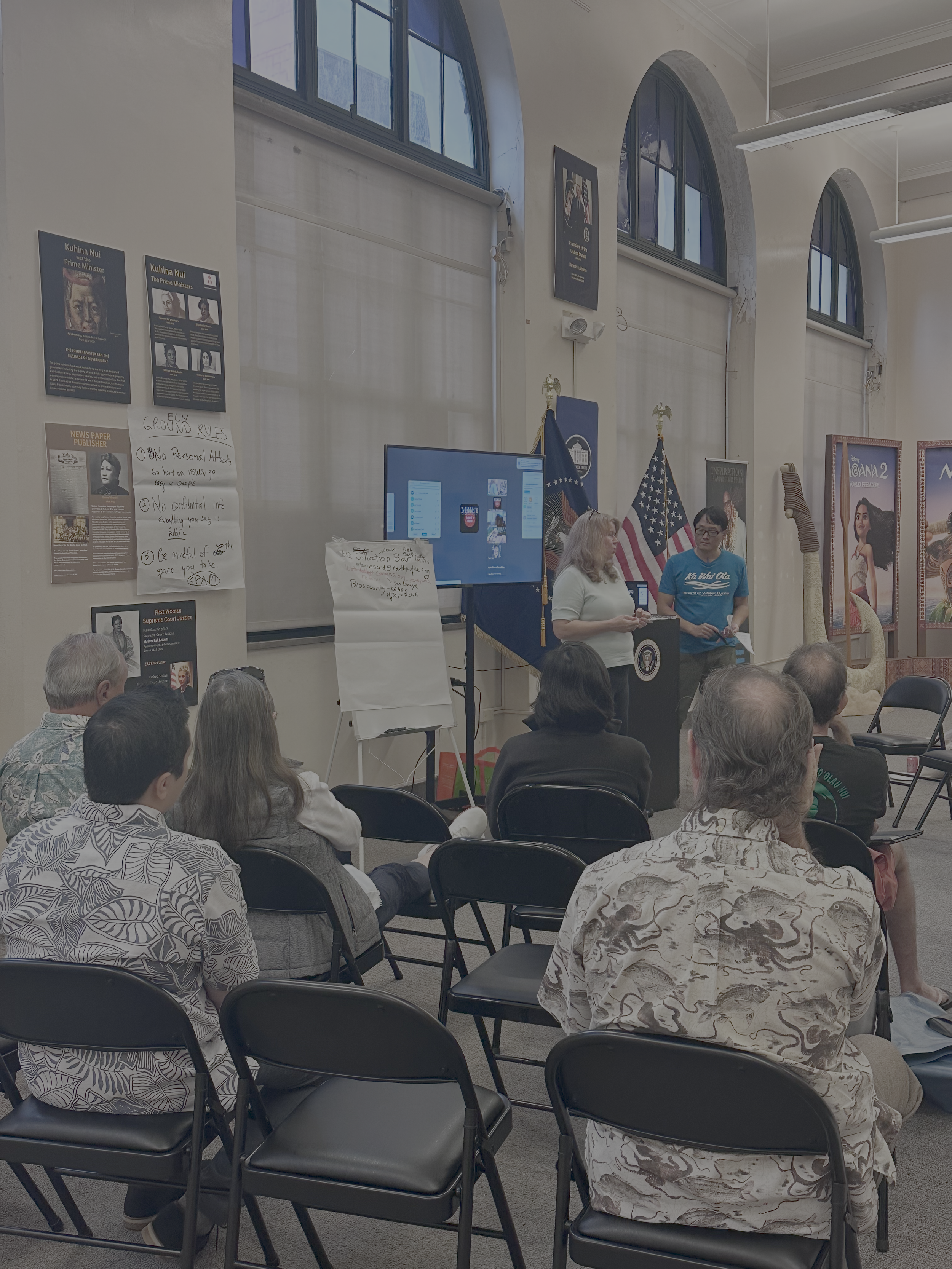


On January 9, the Conservation Council for Hawaiʻi and the Sierra Club of Hawaiʻi hosted the first Environmental Legislative Network (ELN) meeting of 2026, in-person at the Inspiration Hawaiʻi Museum and online. As longtime members are likely aware, ELN is an informal list of individuals from all walks of life interested in learning about and taking action on policy proposals impacting our environmental and cultural integrity. Any member can send action alerts to those in the network via email, subject to the following groundrules: 1) No personal attacks - go hard on the issues but go easy on people; 2) No confidential information - everything you share via ELN should be considered public and shareable; and 3) Please use discretion to avoid over-using ELN and creating "email fatigue."
A summary of priorities shared at the meeting with contact information for more information on each are listed below:
Ban commercial aquarium collection (OHA Package).
For more info, contact: Leinaʻala Ley, leinaalal@oha.org
Reform the Water Commission to reduce political influence and retribution (Earthjustice).
For more info, contact: Marti Townsend, mtownsend@earthjustice.org
Protect biosecurity funding and prohibit/limit inter-island movement of invasive species host material (CGAPS, Limahuli Garden and Preserve).
For more info, contact: Christy Martin, christym@rocketmail.com (biosecurity generally) or Puakea Mookini-Oliveira, pmookini-oliveira@ntbg.org (interisland movement of host material)
Raise the legislative "cap" on Legacy Land Conservation Funding (Trust for Public Land).
For more info, contact: Lea Hong , lea.hong@tpl.org
Follow-through with Green Free funding (Trust for Public Land, Care for ʻĀina Now, Hawaiian Council).
For more info, contact: Lea Hong, lea.hong@tpl.org, Melissa Pavlicek, mpavlicek@hawaiipublicpolicy.com, Madelyn McKeague, madelyn@hawaiiancouncil.org
Phase out cesspools (Ocean Task Force).
For more info, contact: Melissa Pavlicek, mpavlicek@hawaiipublicpolicy.com
Protect uhu (parrotfish) from overharvesting (Ocean Task Force).
For more info, contact: Melissa Pavlicek, mpavlicek@hawaiipublicpolicy.com
Defend the Solar Tax Credit (Earthjustice).
For more info, contact: Marti Townsend, mtownsend@earthjustice.org
Watchdog the Public Utilities Commission nominee confirmation (Hawaiian Council).
For more info, contact: Madelyn McKeague, madelyn@hawaiiancouncil.org
Manage cats on the landscape to prevent imminent extirpation/extinction of ʻalae ʻula and other waterbirds and seabirds (Hawaiʻi Audubon Society, American Bird Conservancy, Kauaʻi Wildlife Conservancy).
For more info, contact: Grant Sizemore, gsizemore@abcbirds.org, Keith Swindle, exdir@hiaudubon.org
Authorize community co-management to enable community-based stewardship in regions mauka-to-makai (Kuaʻāina Ulu ʻAuamo).
For more info, contact: Leimomi Fisher, olan@kuahawaii.org
Propose a constitutional amendment to prohibit military live-fire training on state lands (OHA Package).
For more info, contact: Leinaʻala Ley, leinaalal@oha.org
Require legislative approval for military leases (OHA Package).
For more info, contact: Leinaʻala Ley, leinaalal@oha.org
Require a member of the Land Use Commission to have water expertise. (OHA Package).
For more info, contact: Leinaʻala Ley, leinaalal@oha.org
Prevent fast-tracking of LNG development (Earthjustice, Sierra Club).
For more info, contact: Marti Townsend, mtownsend@earthjustice.org, Wayne Tanaka, wayne.tanaka@sierraclub.org
And the following Environmental Caucus of the Democratic Party priorities:
For more info, contact: Mike Ewall, mike@energyjustice.net
Eliminate Biomass from the RPS
Removes biomass combustion from Hawaiʻi’s Renewable Portfolio Standard to ensure the RPS reflects truly clean, low‑emission energy sources.
GHG Standards for the RPS
Establishes greenhouse gas–based performance standards within the RPS to ensure renewable energy projects deliver real emissions reductions.
Clean Fuels Study
Directs a statewide assessment of clean fuel pathways to support decarbonization of transportation and industrial sectors.
Safe Disposal Requirements for Incinerator Ash
Creates enforceable standards for the handling, transport, and disposal of incinerator ash to prevent environmental contamination.
Incinerator Air Pollution Right‑to‑Know
Expands public access to emissions data from waste incineration facilities. SMA draft completed; being amended to clarify the definition of “waste” (HRS §342H‑1).
Incinerator Regulations
Strengthens regulatory oversight of waste combustion facilities, including performance, monitoring, and emissions controls.
PFAS Working Group
Establishes a statewide working group to coordinate PFAS response, mitigation, and policy development.
PFAS in Reclaimed Water, Sludge, and Agricultural Use
Requires reclaimed water and biosolids used for irrigation or fertilizer to be tested and cleared of PFAS before agricultural application, protecting food safety and soil health.
Environmental Action Levels (EAL) — Notice & Hearing Requirement
Requires DOH to provide public notice and a hearing before increasing or decreasing EALs, ensuring changes are grounded in scientific data and protective of human and environmental health.