
Maui Residents Make Their Voices Heard at the People’s Energy Conference
Written by Stacey Alapai, Maui Community Energy Alliance and Cristina De Leon, Teran James Young Foundation | Reading time: 4min
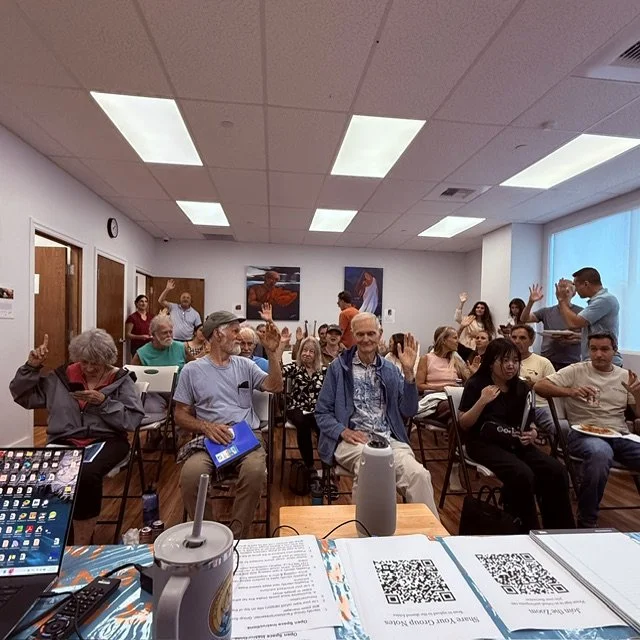
Maui residents made it clear at the People’s Energy Conference, hosted by the Teran James Young Foundation (TJYF) and Maui Community Energy Alliance (MCEA), that they are ready for a seat at the table in deciding their energy future. Held on May 28th at the TJYF offices in Wailuku, the free public event was designed for mutual learning, dialogue, and collaboration amongst a diverse group of community members and energy sector professionals.
Through a combination of panel presentations, open discussion, and breakout sessions, participants examined both established and emerging energy technologies, discussed community priorities, and explored how residents can play a more active role in shaping Maui's energy future. Conversations consistently emphasized the importance of transparency, affordability, resilience, and meaningful community engagement.
Panel Discussion Highlights
Stacey Alapai – Community Values and Engagement: Stacey shared her journey from attending a "Maui's Energy Future" event two years ago to raise concerns about a power line near her house and rising energy costs, which launched her advocacy navigating affordability and energy efficiency programs, Public Utilities Commission proceedings, and industry meetings. Today she is a powerhouse advocate for community-led approaches that prioritize community-benefits and engage the community clearly, concisely and early on. She reminded stakeholders in the room that in order for us to implement plans that center the community, we must allow for "no" to be an option. She encouraged participants to ask questions, seek information, and advocate for solutions that work for their community.
Barry Solomon – Firm Energy: Barry discussed the role of firm energy resources (power sources that are available around the clock and can provide reliable electricity when renewable resources are unavailable). He reviewed Hawaiʻi's current mix of firm power sources and outlined several proposals being considered to replace retiring oil-fired generation. The presentation highlighted the challenges of balancing reliability, affordability, and renewable energy goals as Maui's energy system evolves.
Brad Albert – Renewable Energy and Virtual Power Plants: Brad discussed renewable energy development, the importance of solar incentives, community solar, and the potential role of virtual power plants (linked community battery systems) in supporting a more resilient and distributed energy system.
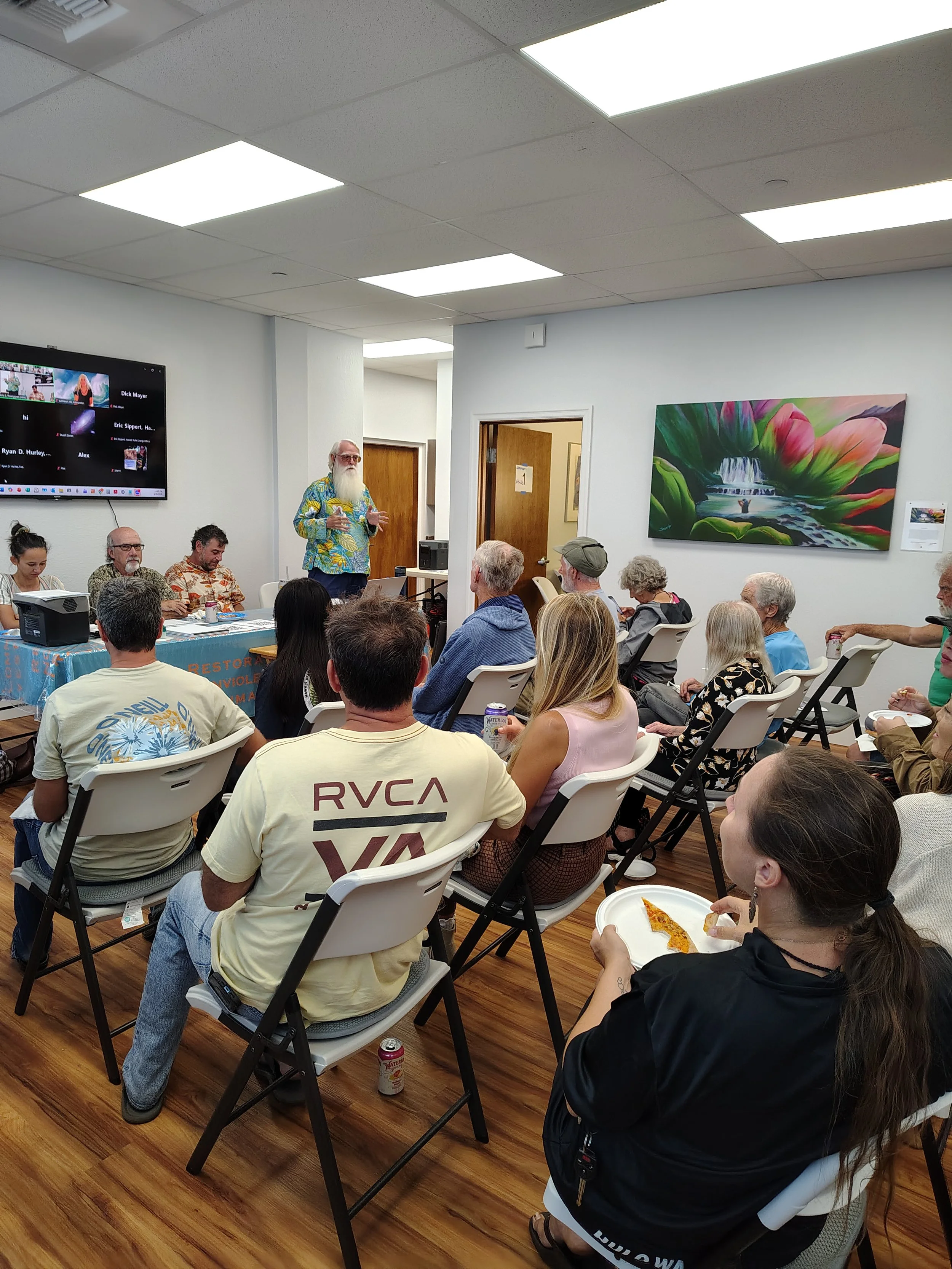
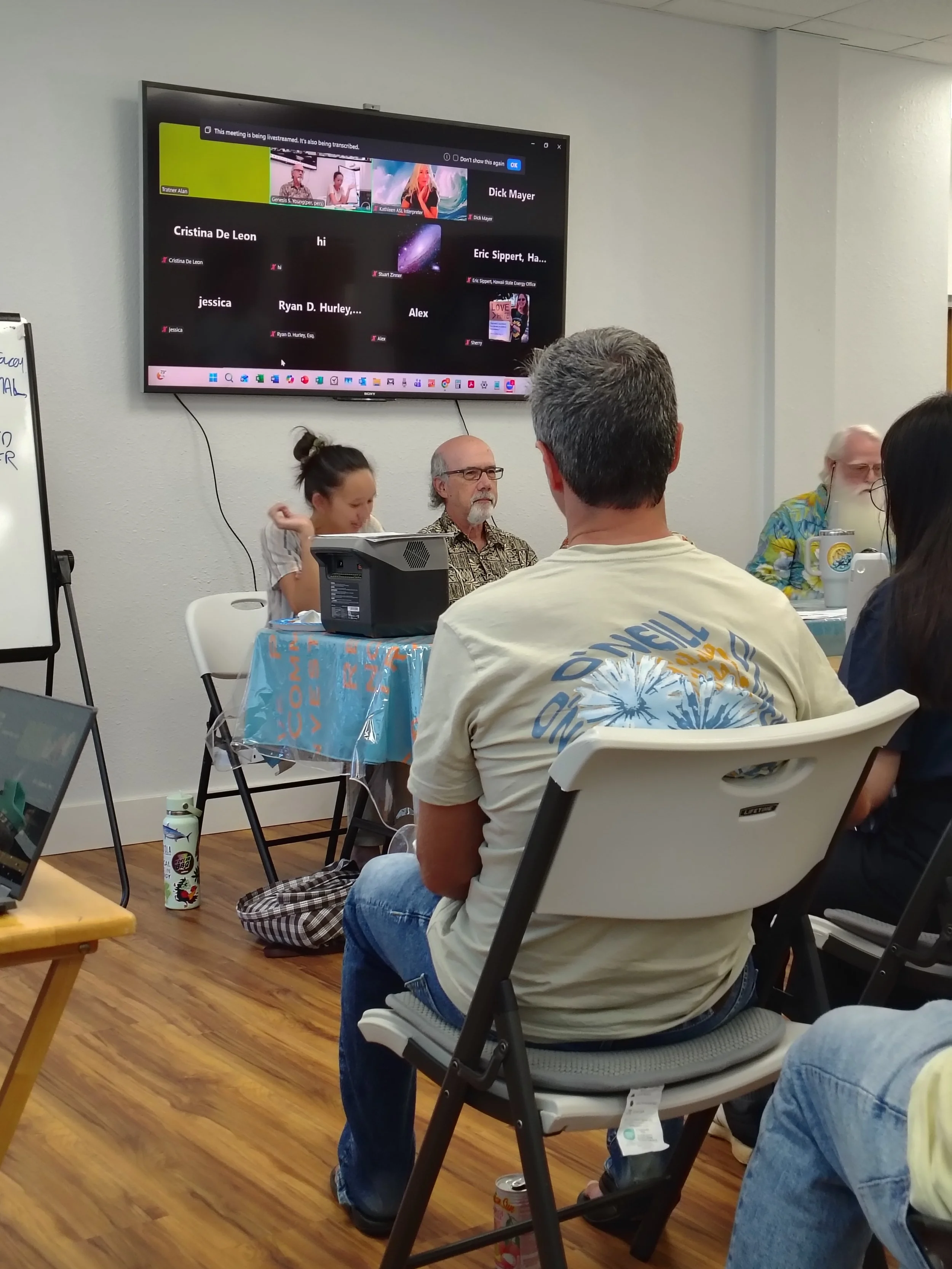
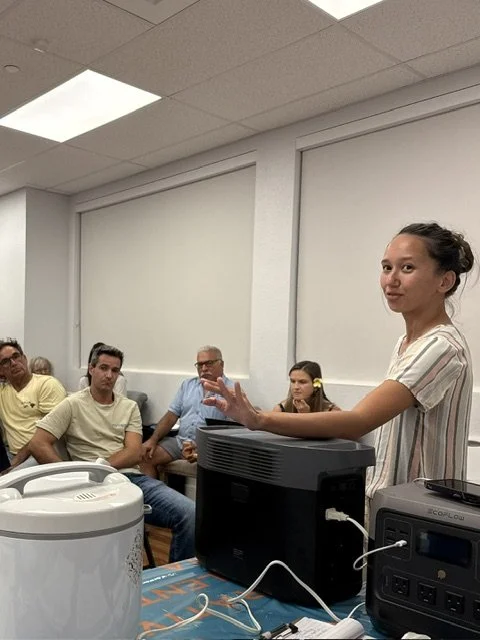
Second Life Solar and Battery Project: Stacey Alapai and Shay Chan Hodges of the PowerBack Project demonstrated how portable backup battery systems and solar panels can be used to power common household appliances while sharing lessons from the Second Life Solar and Battery Project. Funded through a Rotary District 5000 Foundation grant, the project provides affordable backup power systems to Maui fire survivors, helping improve energy resilience during outages while reducing utility costs and supporting renewable energy goals.
Town Hall Discussion
Following the presentations, participants engaged directly with speakers through an open town hall discussion. Community members shared concerns, asked questions, and discussed how various energy technologies and policy decisions could affect Maui residents. A significant portion of the discussion focused on the state’s liquefied natural gas (LNG) proposal and the potential implications for energy affordability, reliability, environmental impacts, and long-term energy planning.
Chapter organizer Lauren Ballesteros-Watanabe also debuted the Sierra Club of Hawaiʻi’s Energy Justice Citizen’s Guide, created to empower residents to understand the basics of the landscape, decision-makers, and processes that govern our energy system. With this comprehensive educational tool community members can ask the right questions, intervene appropriately, and advocate effectively to ensure community priorities and concerns are heard during the decisionmaking process. If you want to learn more, check out the guide yourself here!
Breakout Sessions
After the town hall, attendees had the opportunity to divide into smaller groups to explore specific topics in greater depth.
Community Values - Facilitated by Stacey Alapai
Participants discussed principles that could help guide future energy decisions, including innovation, flexibility, education, transparency, and evidence-based decision-making. The group emphasized maximizing proven technologies, carefully evaluating emerging technologies, and ensuring that projects provide clear community benefits.
Geothermal Energy - Facilitated by Barry Solomon
Participants explored opportunities and challenges associated with geothermal energy on Maui. Discussion focused on site suitability, water availability, project funding, community consent, and potential environmental impacts. Attendees concluded that additional information and analysis would be valuable before assessing geothermal energy's role in Maui's future energy portfolio.
Gravity Battery Energy Storage - Facilitated by Mark
Participants discussed gravity battery technology (for example via raised blocks of concrete) as a potential long-duration energy storage solution. The group explored possible benefits, including compatibility with renewable energy systems and mechanical simplicity, while also raising questions about cost, commercial readiness, and utility adoption. Participants expressed interest in additional case studies and community education efforts.
Key Takeaways
1. Community voices should play a larger role in energy planning and decision-making. 2. Education and accessible information remain critical needs.
3. No single technology will solve Maui's energy challenges; a diverse portfolio of solutions will be needed.
4. New technologies should be evaluated carefully, transparently, and with community involvement.
5. Energy resilience, affordability, and sustainability remain shared priorities across a wide range of perspectives.
Participants expressed interest in continuing the conversation and working collaboratively toward practical solutions that reflect Maui's unique needs and values. If you are a Maui resident and want to get involved, join MCEA for their monthly meetings- every second Friday at 9am on zoom! Learn more here.
The success of the event really came from the passion of the organizers and the participants. They demonstrated why local voices are more essential than ever. We need a decentralized, democratized, and place-based energy future for Maui—one rooted in lived experience, socioeconomic impact, and the health of our natural resources. A just and equitable energy system depends on it.